
Mint Around the House: Bug and Rodent Repellent or Just a Good Garden Story?
You've probably heard it before — plant mint around your house and the mice won't come in, the mosquitoes will stay back, the ants will think twice. It's one of those gardening claims that gets passed around so often it starts to feel like settled fact.
The honest version is more interesting than the myth, and it's actually still a pretty good case for growing mint outside — just for slightly different reasons than you might have been told.
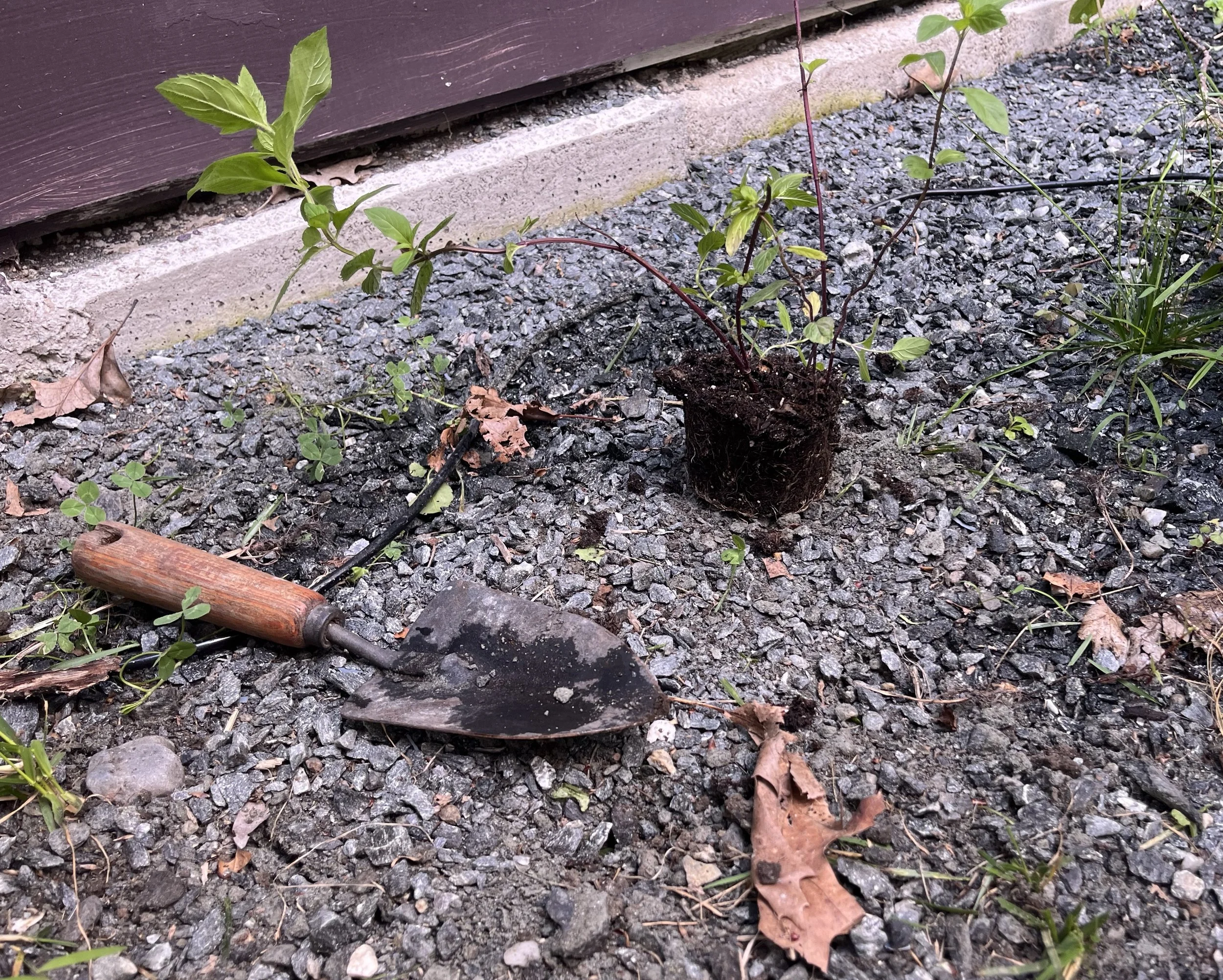
Mint beginning to grow along the back of a Vermont farmhouse
Does Mint Actually Repel Bugs?
For some pests, there's real evidence — with an important asterisk.
Ants and aphids: Mint's strong scent disrupts the scent trails ants use to navigate, and there's decent anecdotal and informal evidence that heavy plantings near entry points make ants less likely to keep crossing through. Aphids tend to avoid mint for similar reasons. These are probably the strongest cases for mint as a real, live-plant deterrent.
Mosquitoes: Mint has some repellent properties, but citronella is the plant most commonly cited for mosquitoes — and even then, simply having the plant growing isn't the same as applying the extracted oil. Rubbing a crushed mint leaf on your skin releases the oils directly and has a noticeable short-term effect; a mint plant growing a few feet away from your patio does considerably less. If mosquitoes are your main concern, mint is a nice addition but probably not your first line of defense.
Spiders and flies: Mint's menthol and other volatile compounds do seem to discourage spiders and certain flies in proximity, particularly in enclosed spaces. Outdoors in open air, the effect is less concentrated and therefore less reliable.
The common thread: fresh mint growing in the ground releases scent when brushed or disturbed, not in a constant, invisible cloud that keeps pests at a safe distance. The claims that go furthest are usually about concentrated peppermint oil — extracted and applied directly — not a plant quietly doing its thing in a garden bed.
What About Mice and Rodents?
This is the most popular claim and also the most overstated one, so let's break it down.
Concentrated peppermint oil does show real effects in controlled studies — the menthol activates sensory receptors in mice that cause discomfort, and mice in test environments actively avoid areas where peppermint oil has been applied. That part is true.
The gap between that and "plant mint around your foundation and mice won't come inside" is a significant one. A live mint plant does not release menthol in concentrations anywhere close to what's used in those studies. Mice don't appear to treat a garden of mint the same way they respond to cotton balls soaked in peppermint oil placed directly at entry points — which is the application that has the most practical evidence behind it.
The honest summary: If you have a serious rodent problem, live mint plants around the exterior of your house are not a reliable solution on their own. If you just want something pleasant-smelling that might take the edge off and provides genuine pest deterrence for ants and smaller insects in the process — and you like the idea of having mint growing around the house anyway — it's a reasonable thing to plant.
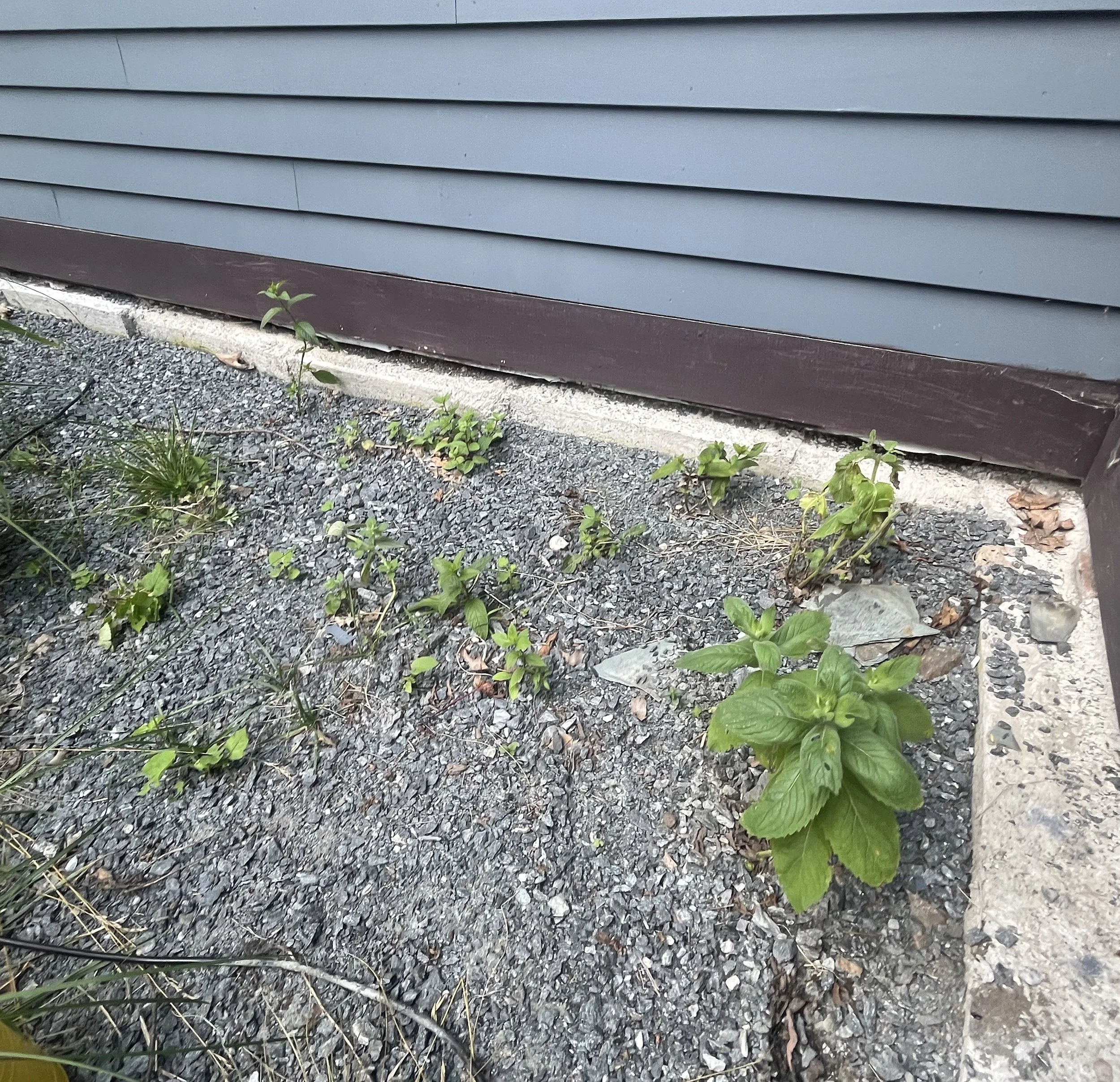
Mint planted at the base of a house exterior, beginning to fill in
A Safety Thing Worth Knowing Before You Plant
If your house was built before 1978, there's one important thing to be aware of before you start growing anything around the foundation that you plan to harvest and eat.
Lead-based paint was used in US residential construction until it was banned in 1978. If your home pre-dates that, the soil immediately around the foundation may contain elevated lead levels from decades of peeling or weathering exterior paint — even if the paint looks fine now, or was repainted over later. That contaminated soil doesn't disappear just because the surface looks okay.
Plants grown in lead-contaminated soil can absorb lead through their roots, and leafy plants like mint — where you're eating the actual foliage — are more of a concern than something like a tomato. The risk is highest within a few feet of the foundation, where paint flaking has historically landed.
If your house was built before 1978, treat anything growing right up against the exterior as decorative, not edible — or get a soil test done first (your local cooperative extension office can usually point you toward testing options). A bed of mint planted a safe distance from the foundation and away from any lead-paint drip zone is a completely different situation.
We're growing some of our own mint at the back of our house right now, which gave us a good reason to make sure we actually know what's in the soil before we eat anything out of it.
Worth Planting Anyway
Even with an honest look at the pest-repellent claims, there are plenty of good reasons to grow mint around the outside of your house — it fills in fast, it smells good every time you brush past it, it discourages ants and small insects near entryways, and it's one of the lowest-maintenance things you can put in the ground. Whether or not it keeps every mouse out, it's a genuinely useful plant to have close to the house.
If you want to try it, our bare-root mint plants establish quickly and spread reliably once they get going. For planting near a house entry or along a walkway where you'll brush against it often, peppermint is the variety with the highest menthol content — which makes it the strongest candidate if bug deterrence is part of your goal, and it smells great every time you walk past.
