
Mint gets treated like a garnish. A sprig on the side of the plate. A flavor in your gum. Something you grow because it's easy and smells good.
But spend a little time with what's actually in the leaf — the chemistry, the compounds, the things your body notices when you drink a cup of mint tea — and it starts to look like more than a garnish. Not a miracle cure. Not a superfood in the overwrought marketing sense. Just a genuinely useful herb that most people already have access to and most people underuse.
Here's the actual picture.
Mint by the Numbers
The table below covers fresh spearmint leaves — the most common culinary mint and the one most likely to end up in your tea. Peppermint shares most of the same profile but runs higher in menthol, which affects some of the functional benefits described below.
A few things stand out in that table. For a plant with 6 calories per quarter cup, mint carries a surprisingly respectable iron and manganese profile — both relevant to energy metabolism. The fiber-to-weight ratio is high. And the vitamin A content, coming from beta-carotene in the leaf, is legitimate for a fresh herb used in cooking quantities.
None of this will replace a balanced diet, but it does mean the herb in your garden is doing more than just smelling good.
What Mint Tea Actually Does
When you brew fresh mint into tea, most of the calories and solid nutrients stay in the leaves. What moves into the water are the volatile compounds — primarily menthol (in peppermint) and carvone (in spearmint) — along with antioxidant polyphenols like rosmarinic acid. A brewed cup of mint tea has almost no calories, no caffeine, and a measurable concentration of those active compounds.
Digestion. This is the most well-supported benefit and the one most people already know intuitively. Menthol relaxes smooth muscle tissue in the gastrointestinal tract, which is why peppermint oil has been studied for IBS symptom relief and why a cup of mint tea after a heavy meal genuinely helps. The effect is real — not dramatic, but real. Several clinical studies have looked at peppermint oil capsules for IBS specifically, and the evidence is good enough that it's included in some clinical guidelines as a first-line option.
Nausea. The cooling, slightly numbing effect of menthol appears to reduce nausea signals. Peppermint tea is commonly used during pregnancy for morning sickness, during travel for motion sickness, and post-surgery in some hospitals. Again — not a replacement for medical care when nausea is severe, but a useful, zero-side-effect option for mild nausea.
Sinus and respiratory congestion. Steam from hot mint tea + the menthol vapor it carries is a legitimate decongestant. It doesn't clear congestion the way a pharmaceutical does, but it opens up airways temporarily and makes breathing feel easier. Hot peppermint tea when you're sick is one of those folk remedies that turns out to have a decent mechanistic explanation.
Antioxidant load. Rosmarinic acid, one of the primary polyphenols in mint, is a well-characterized antioxidant with documented anti-inflammatory properties in lab settings. The concentrations in a cup of tea are modest, but mint tea's antioxidant profile is comparable to — and in some cases better than — green tea, without the caffeine.
Caffeine-free, always. Mint contains no caffeine. That makes it genuinely useful as an afternoon or evening drink for people who want something warm and flavorful without affecting sleep. It's also one of the few herbal teas with enough going on — flavor, active compounds, real aroma — that it doesn't taste like hot water with vague intentions.
Variety Matters
Not all mint teas are the same, because the underlying chemistry differs by variety.
Peppermint (Mentha × piperita) is the highest-menthol option and the one most studied for digestive and respiratory benefits. If you're brewing tea specifically for digestion or congestion, peppermint is the variety to reach for.
Spearmint (Mentha spicata, including curly/crispa and Kentucky Colonel) has much lower menthol and higher carvone, which gives it a sweeter, more approachable flavor. Spearmint is better for everyday drinking and for people who find peppermint too intense. Some research has looked at spearmint specifically for hormonal effects — a few small studies suggest it may have mild anti-androgen properties — though the evidence is preliminary.
Apple mint and other soft mints make the gentlest tea. Lower menthol, mild flavor, good for blending with other herbs or for people new to herbal tea who find plain peppermint medicinal-tasting.
Chocolate mint makes a genuinely good dessert tea — particularly good iced, or blended with a small amount of cacao.
How to Brew It
Fresh mint tea doesn't need much. A small handful of fresh leaves (roughly what fits loosely in one hand) in a mug, covered with water just off the boil, steeped 5 minutes, leaves removed or left in. The flavor is noticeably better with fresh leaves than dried — more complex, brighter, more aromatic — which is one of the stronger arguments for growing your own.
If you're using dried mint, about a tablespoon per cup is the standard ratio.
Mint also blends well. Fresh mint + a slice of ginger is one of the better combinations for digestion. Mint + lemon is classic. Mint + chamomile for something more relaxing in the evening.
Mint isn't going to change your health in dramatic ways. But it's a genuinely useful herb, it grows easily, it's available fresh from late spring through fall and dryable for winter, and the cup of tea it makes is one of the more pleasant things you can do with five minutes and hot water.
That seems like enough.
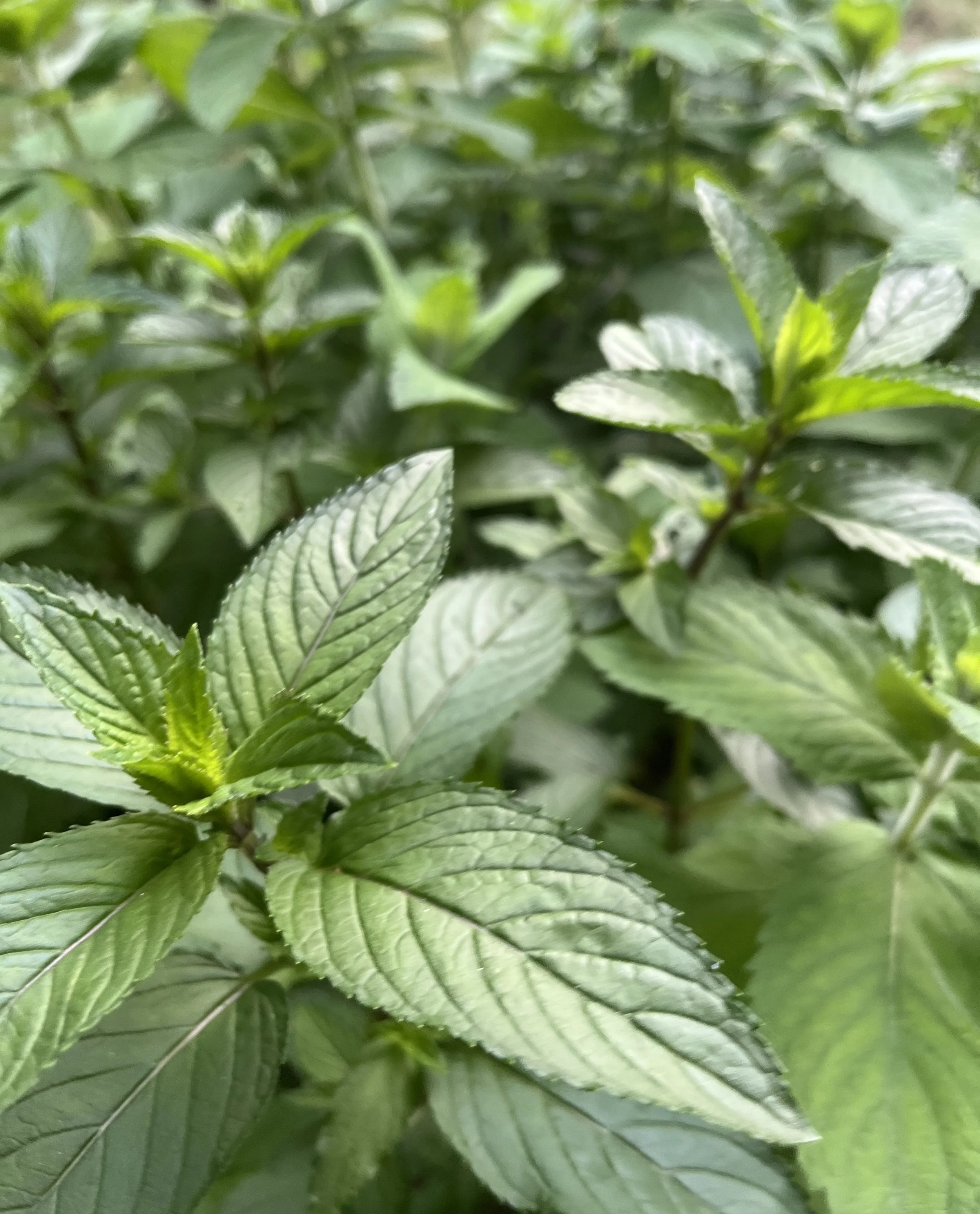
Our Chocolate Mint —.
