How to Grow Mint
You don't need a green thumb. You just need a windowsill.
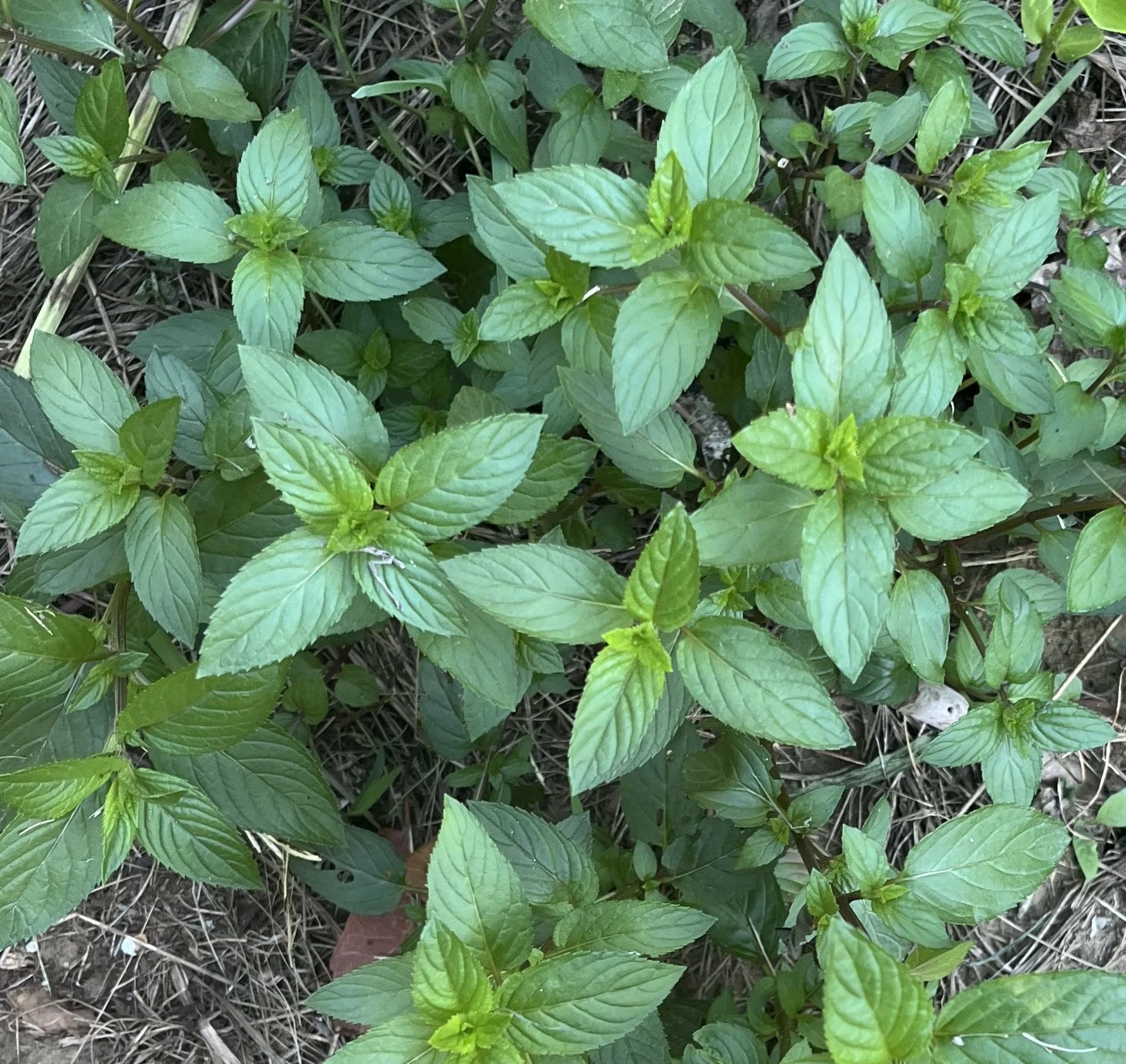
Mint is one of the most forgiving plants on the planet. It grows in fields, in cracks in the sidewalk, in forgotten corners of gardens — and yes, in a glass of water on your kitchen counter. If you've ever killed a houseplant, mint is your redemption arc.
Everything we ship is grown in our field in Brattleboro, Vermont, harvested bare root, and sent to you clean and ready to grow. No soil. No pot. No mystery. Here's everything you need to know.
What's in your package
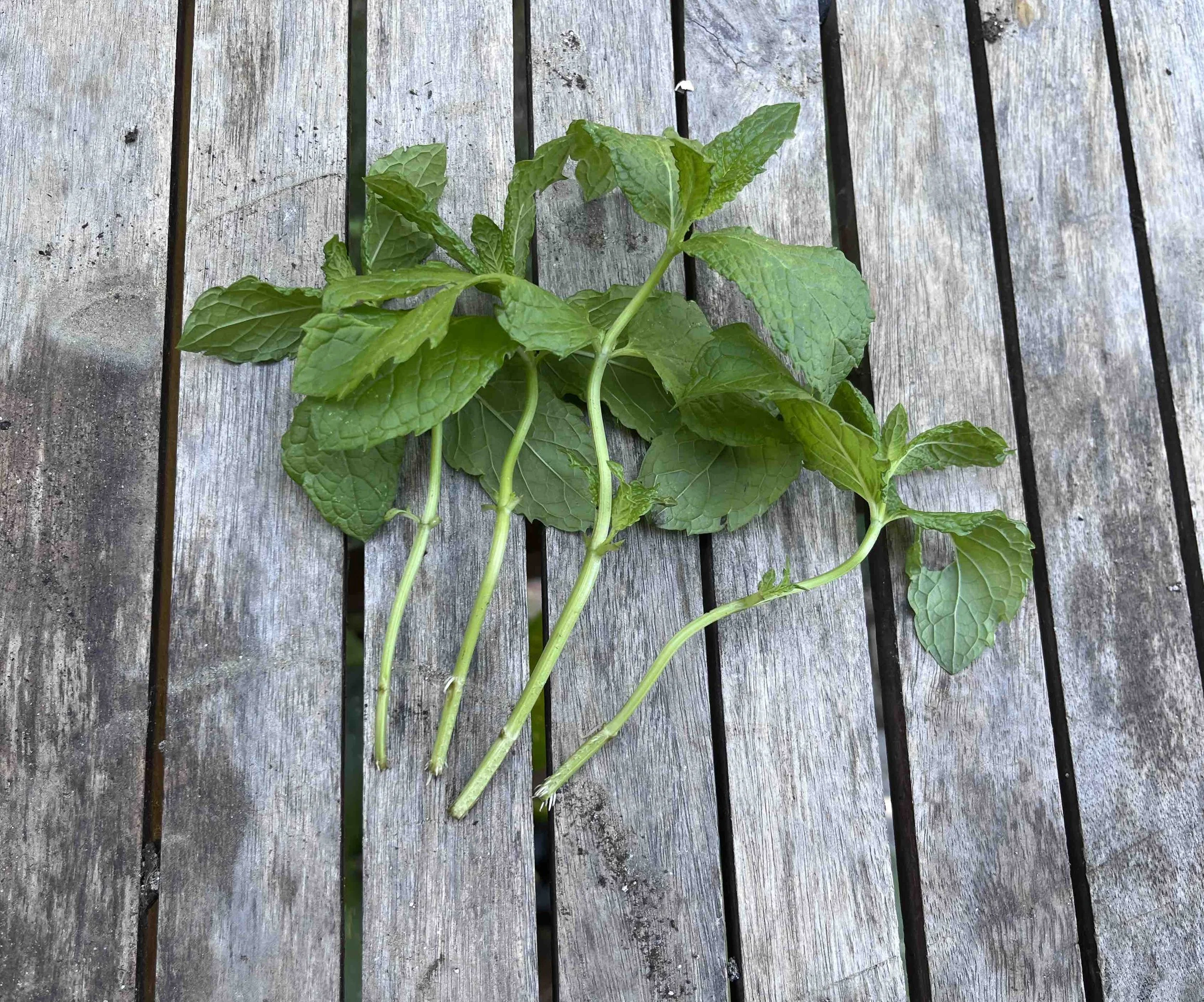
Your plants arrive bare root — stems with roots attached, wrapped in a moist medium to keep them alive in transit. There's no plastic pot, no excess packaging, just the plant. We ship this way because it's lighter, gentler on the plant, and generates almost no waste. The kraft paper and cardboard packaging is recyclable or compostable.
There's a less obvious reason too. Washing every plant clean of soil means we physically cannot ship you anything living in that soil — including jumping worm cocoons, which spread through potted plants and are about two millimetres across and effectively invisible. Extension guidance on limiting their spread recommends sharing only clean, bare-root plants. It's the standard we already work to.
Give them a drink
The moment your plants arrive, unwrap them and place the stems in a glass or jar of water. Submerge the roots and lower stems up to the first set of leaves — not the leaves themselves, just below them. Set them somewhere with natural light and let them rest for 24–48 hours before planting.
This rehydrates the roots after their journey and gives you a chance to watch them perk up. Within a day most plants will visibly straighten and brighten.
If you're not ready to plant yet, mint genuinely thrives in a glass of water on a sunny windowsill for weeks. Change the water every few days. It will root further into the water and may produce new growth before you plant it.
Planting your mint
When you're ready to move it to soil, the process couldn't be simpler.
In a container (recommended for most people)
Choose a pot at least 6 inches deep with drainage holes. Fill with any standard potting mix. Dig a small hole, nestle the roots in, and cover with soil up to just below the first leaves. Water well and place in a sunny spot. That's it.
In the ground
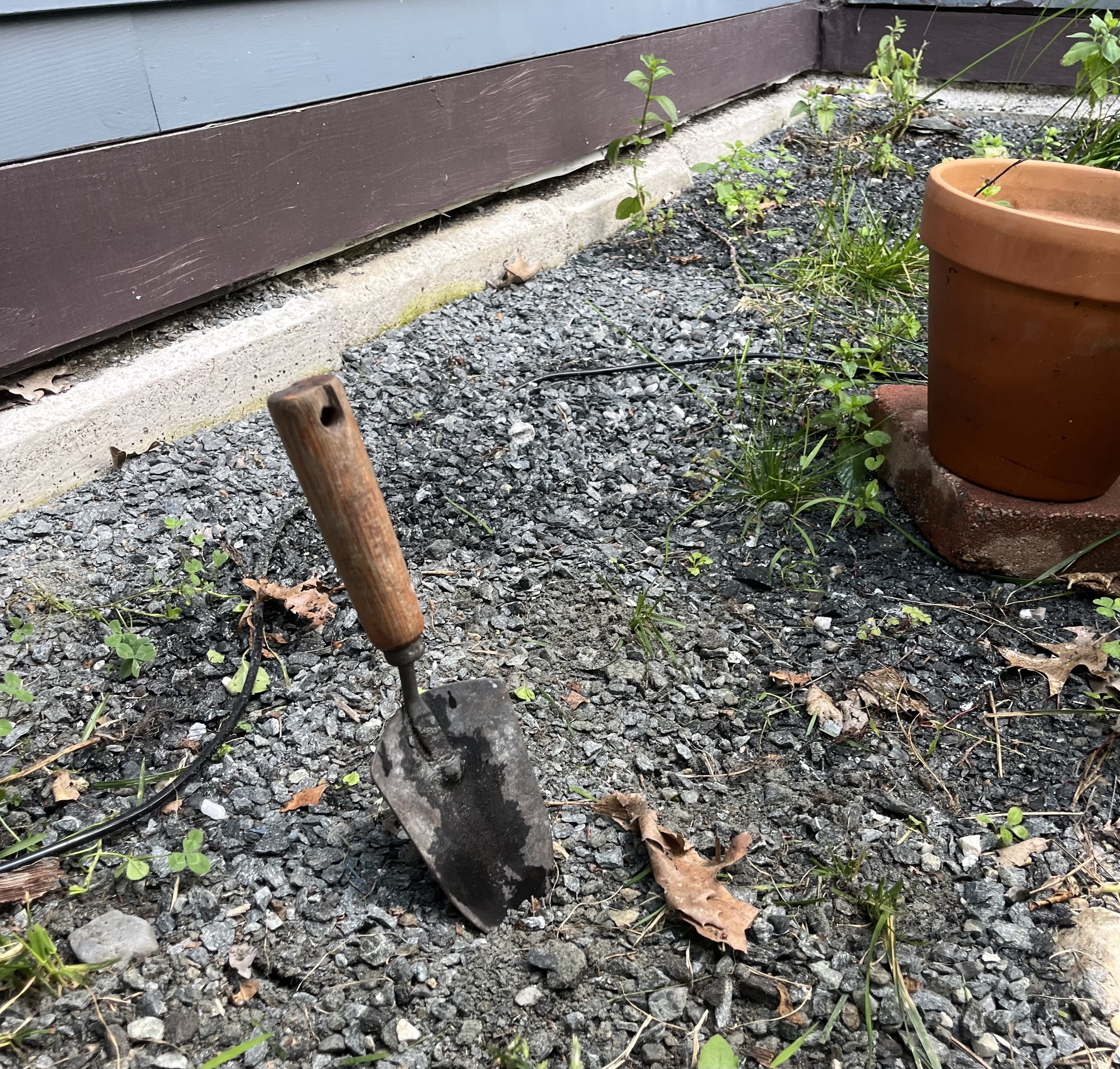
Pick a spot with at least partial sun and reasonably moist soil. Dig a hole slightly larger than the roots, set the plant in, fill it back in, and water.
Either way: mint is not demanding. Regular watering when the soil feels dry, a sunny spot, and it will reward you generously.
One note before you dig — mint spreads. If you're planting near anything you care about, read the next section first.
How do you stop mint from spreading?
This is the real question behind most mint searches, so here's the honest answer: you don't stop it, you contain it.
Mint spreads through underground runners called rhizomes. Left in open ground it will keep going — under a path, through a lawn, into a neighbouring bed. It doesn't respect your plan.
Grow it in a pot
The simplest and most reliable answer. Any container with drainage works. Keep the pot up off bare soil, though — rhizomes will escape through the drainage holes and root wherever they land.
Sink a barrier
Bury a large pot or a length of edging with the rim an inch or two above soil level, and plant into it. Rhizomes run shallow and hit the wall. That raised rim matters — without it they simply travel over the top.
Give it ground you don't mind losing
A strip along a fence, a difficult corner, the awkward patch beside the drive. Let it have the whole thing. This is genuinely the least work, and a solid mint bed is a better outcome than most things that would grow there.
What doesn't work: pulling runners as you spot them. You'll miss some, and a fragment of rhizome left in the soil starts a new plant.
What soil does mint need?
Almost any soil, which is part of why it's so hard to kill.
Mint prefers moist, reasonably rich soil that drains — the sort of ground you'd find at the edge of a stream, which is where many of its wild relatives grow. But it tolerates a very wide range, including soil most herbs would sulk in.
In a pot: any standard potting mix. Nothing special needed — no cactus mix, no amendments.
In the ground: if your soil is heavy clay, work in compost to open it up. If it's sandy and dries fast, compost helps there too by holding moisture. If it's ordinary garden soil, plant straight into it.
pH anywhere from about 6.0 to 7.5 suits it, which covers most garden soil. Not worth testing for.
What it doesn't want is ground that stays waterlogged all season. Mint likes moisture, not standing water — roots sitting in saturated soil will rot.
The one real mistake is over-feeding. Rich nitrogen fertiliser produces lush growth with noticeably weaker flavour and aroma. Mint grown a little lean tastes better.
How much sun does mint need?
Four to six hours a day is plenty. Full sun to partial shade both work.
Full sun gives the most compact, bushy growth and the strongest flavour, since the oils carrying the scent build with light exposure.
Partial shade is fine too, and in hot climates it's better — mint in the South appreciates afternoon shade and will struggle in full afternoon sun through July and August.
Indoors, a bright windowsill is enough. South-facing is ideal; east or west will do.
Mint is one of the few culinary herbs that genuinely performs somewhere too shady for basil or rosemary. If you have a part-shade corner you've never found a use for, that's a mint bed.
How mint grows
Once established, mint spreads through those rhizomes into a cluster, then a patch, then a small colony. This is mostly a feature — one order of bare root plants can fill a container, a raised bed, or a garden border within a single growing season.
In cold climates like Vermont, mint dies back to the ground in winter and returns reliably in spring from its root system. It's a perennial — plant it once and it keeps coming back, usually bigger.
When and how to harvest mint
Cut more than you think you should. Mint regenerates after cutting, and the more you harvest, the more it grows.
Snip stems just above a leaf node — the point where a pair of leaves meets the stem. Two new shoots branch from every cut, so the plant comes back fuller each time. Regular harvesting keeps it bushy and healthy; left alone it gets leggy and woody.
Best flavour comes just before it flowers, when oil content peaks. Morning, once the dew has dried, is the traditional time to cut.
Let some of it bloom anyway. Flowering mint is one of the best pollinator plants you can grow, and it blooms in high summer when little else is offering much. Harvest hard from part of the patch and leave the rest.
Which mint is easiest to grow?
All of them, more or less — but if you want the most forgiving:
Apple mint and peppermint are the two we'd hand a first-time grower. Both are vigorous, both tolerate neglect, and both do something useful in a kitchen.
Spearmint types — including Kentucky Colonel and curly spearmint — are nearly as easy and better for cooking.
The fruit and novelty varieties like banana, strawberry, and chocolate are no harder to grow. They're just less common, so nobody's told you they're easy.
The one genuinely different plant in our range is mountain mint, which isn't a true Mentha at all. It clumps rather than running, so it's the one to choose if you want the pollinator value without the spreading.
A brief history of mint
Mint has been grown, traded, and argued over for thousands of years. Ancient Egyptians used it as an offering. Romans scattered it on floors to scent their homes. Medieval monks cultivated it in monastery gardens for medicine and cooking. It shows up in Greek mythology, in the Bible, in virtually every food tradition on earth.
The reason there are so many varieties comes down to mint's biology: it hybridizes freely and readily, producing new crosses wherever different species grow near each other. Peppermint itself is a natural hybrid of watermint and spearmint, first documented in England in the 1690s. Over centuries of cultivation and cross-pollination — intentional and accidental — hundreds of distinct varieties have emerged, each with its own flavor profile, growth habit, and aroma.
What we grow in Brattleboro is a small collection of the varieties we love most: the classic culinary mints, the curious ones, and the beautiful ones. Each one has its own character, but all of them share the same easygoing nature. They want to grow. Your job is just to let them.
Have fun with it
Once you have more mint than you know what to do with — and you will — here are some ways to put it to work.
In the kitchen
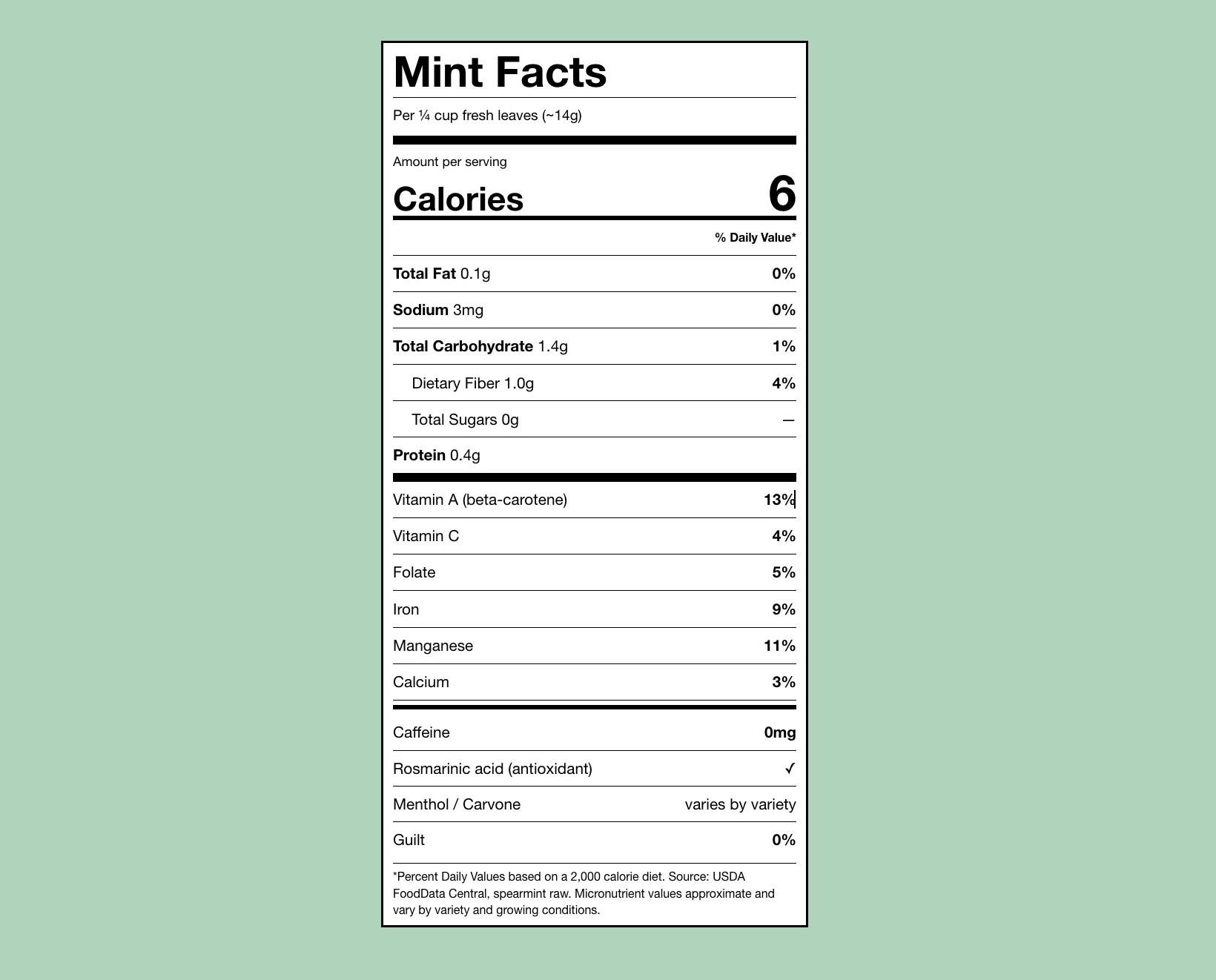
Muddle into cocktails and mocktails, steep for tea, toss into salads, blend into sauces and chutneys, or layer into desserts. Chocolate mint over vanilla ice cream is not optional. Pineapple mint makes a remarkable lemonade.
For your body
Add fresh leaves to a bath, make a mint-infused oil for sore muscles, or dry and grind into a scrub. A sprig of spearmint tucked into your pillowcase is a surprisingly effective way to end a long day.
Around the house
Dried mint sachets in drawers and closets keep things smelling clean and deter moths naturally. Mint is also a natural pest deterrent — aphids, ants, and some rodents dislike it strongly.
In the garden
Mint is a pollinator magnet when it flowers. Let a few stems go to bloom and watch the bees arrive. It's also a classic companion plant near brassicas, tomatoes, or peppers. And you'll have more than enough to divide and give away.
Preserve it
Dry large batches by hanging stems upside down in a warm spot for a week. Store in a sealed jar for winter tea and cooking. You can also freeze whole leaves flat on a baking sheet — they hold their flavor remarkably well.
Common questions
Can I grow mint indoors?
Yes, year-round. A bright windowsill and a pot with drainage is all it takes. Water when the top inch of soil is dry.
Can I grow mint in water permanently?
For months, yes. Change the water every few days and it will root and put out new growth. Roots formed in water are more brittle than soil-grown ones, so be gentle when you eventually pot it up.
How far apart should I plant mint?
About 12 to 18 inches if you want plants to knit together into a patch, closer if you want cover faster. In a pot, one plant per 6-inch pot, or three or four in something larger.
When should I plant mint?
Any time the ground isn't frozen. Spring gives the longest first season. In cold climates, plant at least four to six weeks before hard frost so the roots establish.
Do I need to fertilise mint?
No. Feeding produces lush growth with weaker flavour. Compost worked in at planting is more than enough.
Why does my mint taste weak?
Usually too much shade, too much fertiliser, or it has flowered. Cut it back hard and let the new growth come in.
Can I grow mint from seed?
Not the named varieties. Peppermint is a sterile hybrid that produces no viable seed at all, and cultivars like chocolate mint are clones that don't come true from seed. Full explanation here →
Will mint survive winter?
In zones 3 through 9, yes — it dies back to the ground and returns in spring. Pots are more exposed than open ground, so group them against a wall or sink them for the winter.
Questions? Reach us at hello@mint.monster — we're happy to help with anything from planting to troubleshooting to figuring out which variety belongs in your mojito.
Mint Monster LLC — Brattleboro, Vermont
Read More …