
 Image 1 of 3
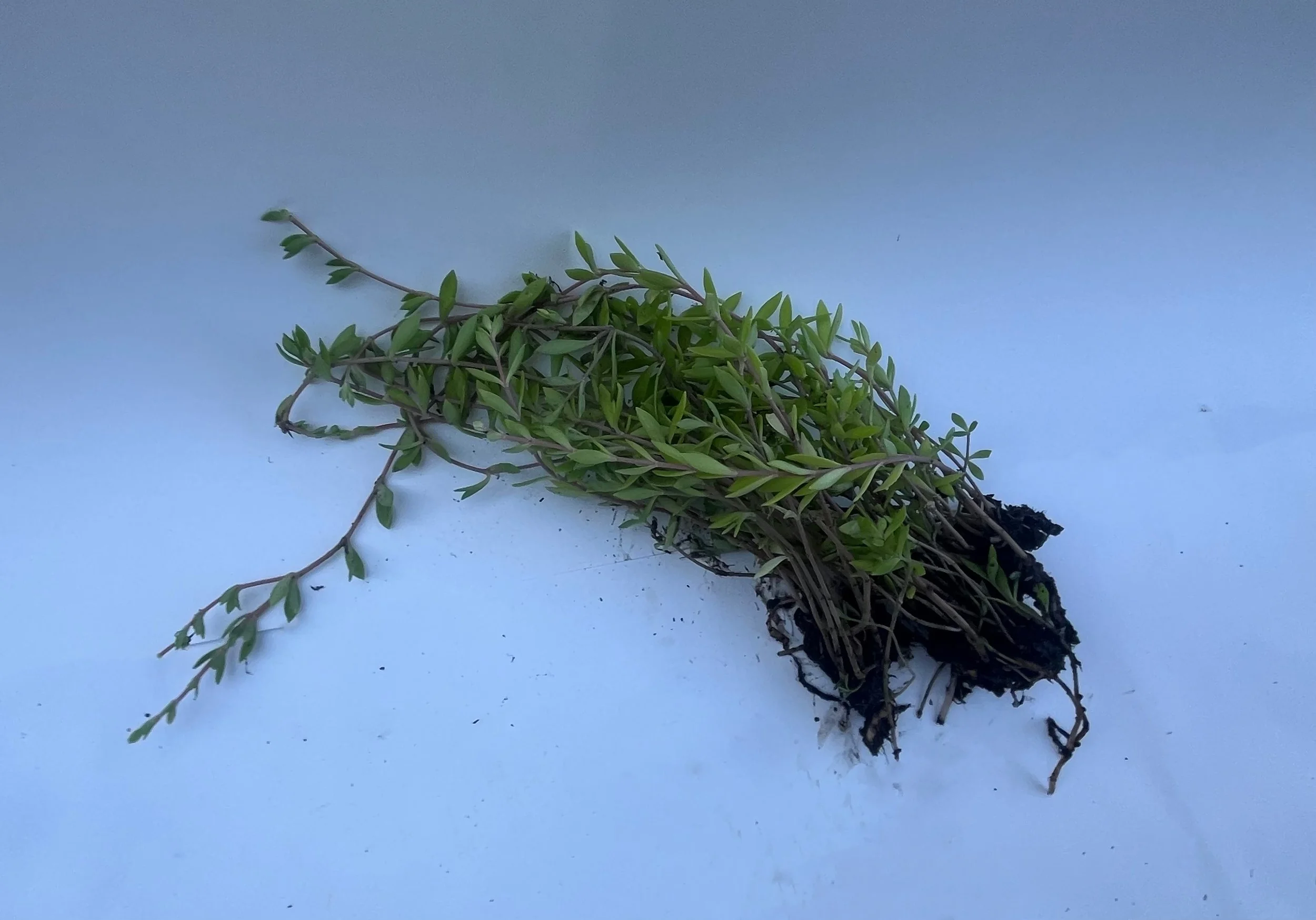 Image 2 of 3
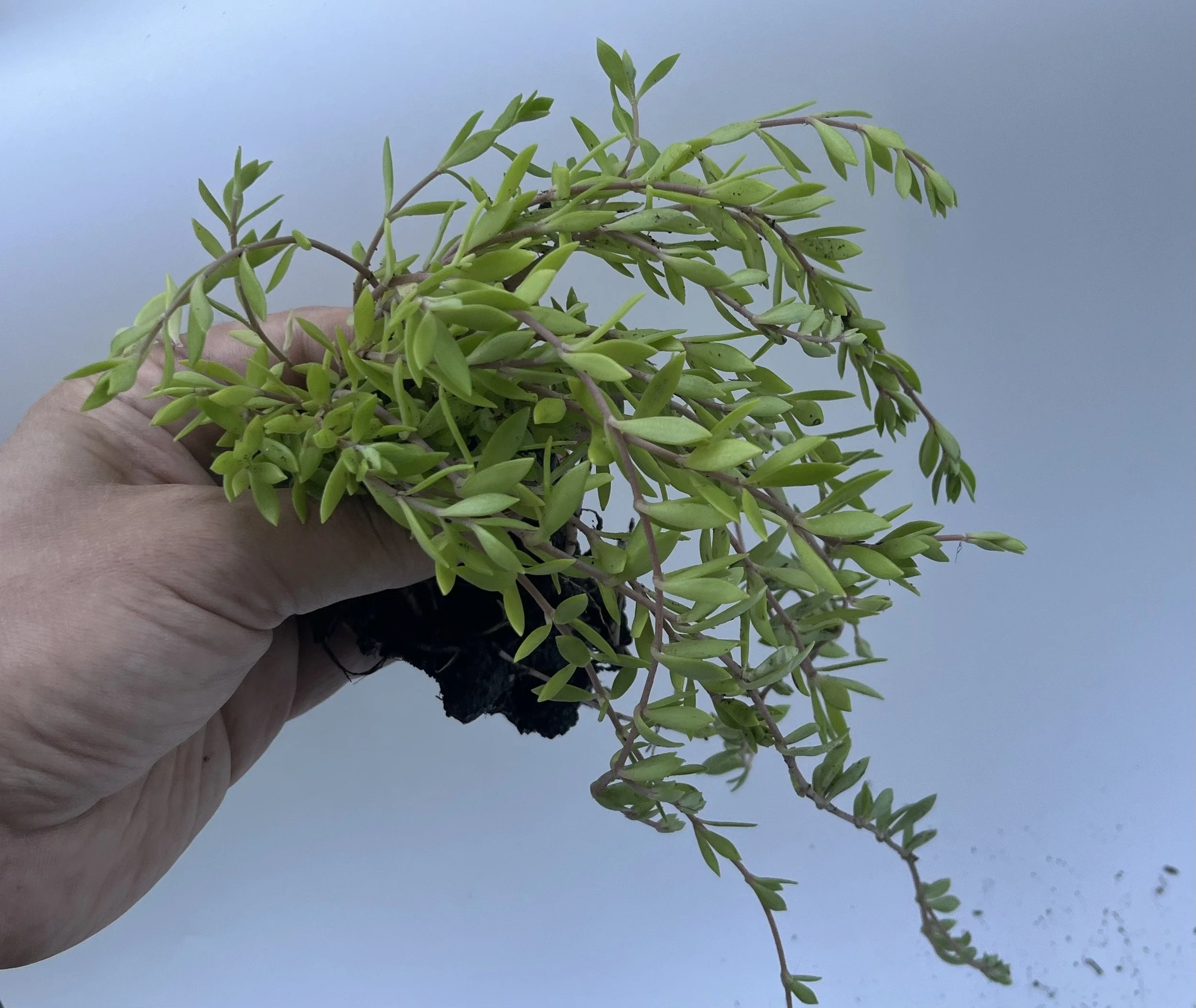 Image 3 of 3
An apple-sized bunch — dozens of live strands
Field grown in Brattleboro, Vermont
Washed clean of soil, mailed in moist medium
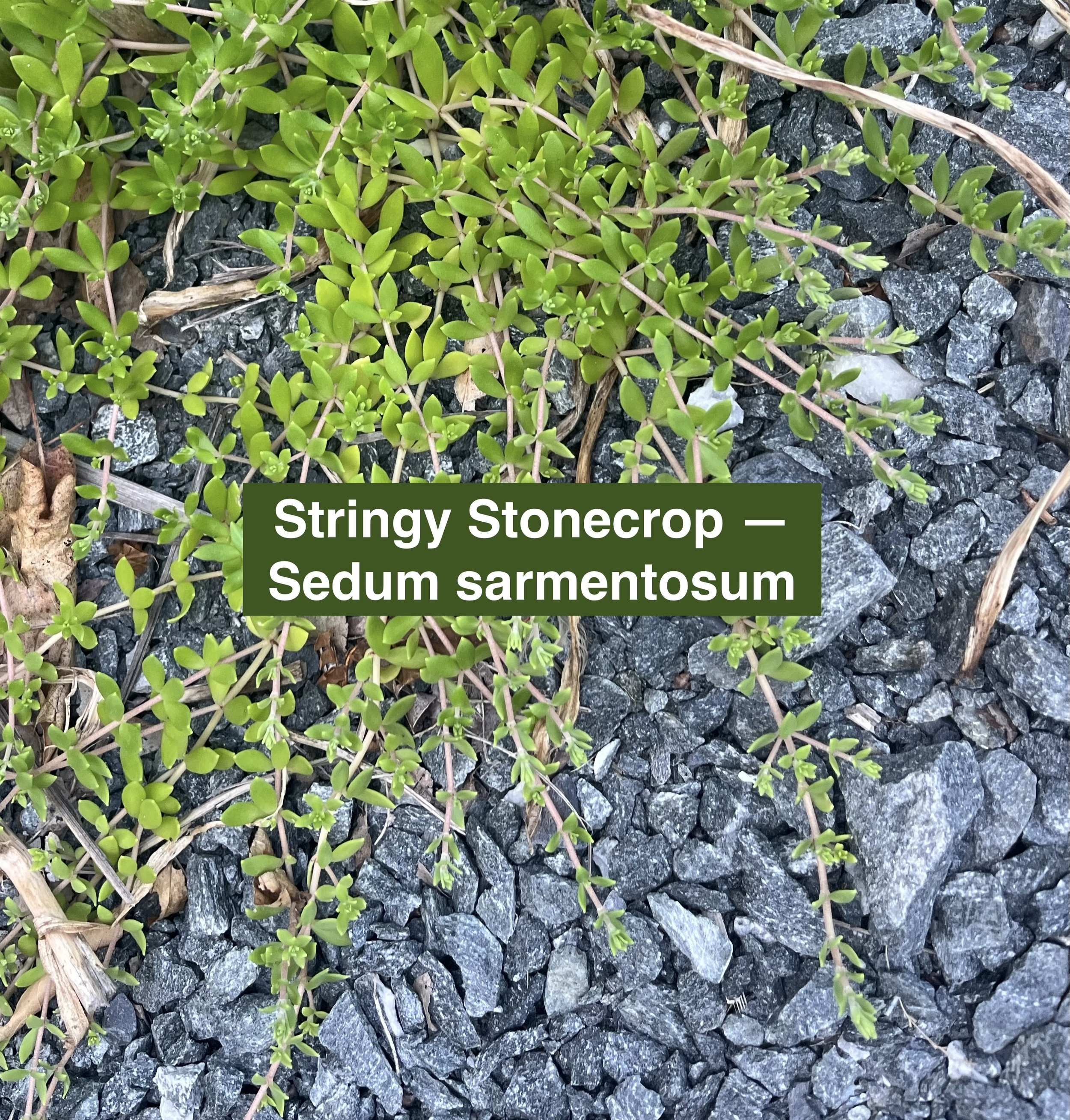
Stringy stonecrop is the plant you put where nothing else will grow. Gravel, rock walls, the cracks between pavers, the strip along the driveway that bakes all afternoon — it doesn't just tolerate those spots, it prefers them. The stems are fleshy and pale green, they trail rather than climb, and every strand roots wherever it touches soil. There's no planting technique to learn: lay the strands on the ground, press them down, water once, and walk away.
You'll get an apple-sized bunch — dozens of strands, enough to start several patches or cover a few square feet as they fill in. Break the bunch apart and scatter it across the area you want covered. Each piece becomes its own plant.
It's also genuinely edible, which most people don't expect from a succulent. In Korea it's called dolnamul (돌나물) — "stone greens" — and the tender spring growth is eaten raw in salads, dressed with a gochujang-vinegar sauce, or added to water kimchi. The texture is crisp and juicy, the flavor mild and slightly tart. It's high in vitamin C and harvested by the handful.
In late spring it throws small yellow star-shaped flowers across the whole mat. Evergreen in mild winters, and reliably back from the roots after a Vermont one.
A note on how it spreads: this plant is vigorous — that's the point of it, and it's also something to plan around. Every fragment roots. Put it where you want ground covered and it will do the job better than almost anything else; put it next to a delicate rock garden planting and it will move in. Treat it like mint: give it a defined area, an edge it can't cross, or a container, and it's a workhorse rather than a problem.
Quick Facts
Botanical name: Sedum sarmentosum
Also known as: Stringy stonecrop, graveyard moss, dolnamul (돌나물)
Flavor / Use: Mild, crisp, slightly tart — eaten raw in Korean spring dishes
Best for: Groundcover, rock walls, green roofs, gravel, between pavers, edible landscaping
USDA Zones: 4–9
Light: Full sun to part shade
Height: 3–6 in (low creeping mat)
Water: Drought tolerant once established — needs sharp drainage
Spread: Aggressive — roots at every node. Plant where you want full coverage.
Of Interest
Stringy stonecrop is one of the standard workhorse species in green roof construction, and for a specific reason: it survives on almost no soil depth. Green roof systems often run just three to four inches of growing medium, which rules out most perennials — but Sedum sarmentosum stores water in its leaves and stems, roots shallowly, and tolerates the wind and heat exposure of an unshaded rooftop. Entire commercial roof systems are planted from loose cuttings scattered across the surface, exactly the way this bunch ships.
The same trait that makes it useful on a roof is what makes it move so freely on the ground. Unlike plants that spread by seed or by underground rhizome, stonecrop spreads by simple contact — a strand breaks off, lands somewhere, and roots within days. It's why it turns up in old cemeteries throughout the eastern US, where it earned the name graveyard moss: planted once a century ago, still spreading, entirely unattended.
Source: Wikipedia — Sedum sarmentosum | Go Botany — Native Plant Trust | Virginia Tech Weed ID
An apple-sized bunch — dozens of live strands
Field grown in Brattleboro, Vermont
Washed clean of soil, mailed in moist medium
Stringy stonecrop is the plant you put where nothing else will grow. Gravel, rock walls, the cracks between pavers, the strip along the driveway that bakes all afternoon — it doesn't just tolerate those spots, it prefers them. The stems are fleshy and pale green, they trail rather than climb, and every strand roots wherever it touches soil. There's no planting technique to learn: lay the strands on the ground, press them down, water once, and walk away.
You'll get an apple-sized bunch — dozens of strands, enough to start several patches or cover a few square feet as they fill in. Break the bunch apart and scatter it across the area you want covered. Each piece becomes its own plant.
It's also genuinely edible, which most people don't expect from a succulent. In Korea it's called dolnamul (돌나물) — "stone greens" — and the tender spring growth is eaten raw in salads, dressed with a gochujang-vinegar sauce, or added to water kimchi. The texture is crisp and juicy, the flavor mild and slightly tart. It's high in vitamin C and harvested by the handful.
In late spring it throws small yellow star-shaped flowers across the whole mat. Evergreen in mild winters, and reliably back from the roots after a Vermont one.
A note on how it spreads: this plant is vigorous — that's the point of it, and it's also something to plan around. Every fragment roots. Put it where you want ground covered and it will do the job better than almost anything else; put it next to a delicate rock garden planting and it will move in. Treat it like mint: give it a defined area, an edge it can't cross, or a container, and it's a workhorse rather than a problem.
Quick Facts
Botanical name: Sedum sarmentosum
Also known as: Stringy stonecrop, graveyard moss, dolnamul (돌나물)
Flavor / Use: Mild, crisp, slightly tart — eaten raw in Korean spring dishes
Best for: Groundcover, rock walls, green roofs, gravel, between pavers, edible landscaping
USDA Zones: 4–9
Light: Full sun to part shade
Height: 3–6 in (low creeping mat)
Water: Drought tolerant once established — needs sharp drainage
Spread: Aggressive — roots at every node. Plant where you want full coverage.
Of Interest
Stringy stonecrop is one of the standard workhorse species in green roof construction, and for a specific reason: it survives on almost no soil depth. Green roof systems often run just three to four inches of growing medium, which rules out most perennials — but Sedum sarmentosum stores water in its leaves and stems, roots shallowly, and tolerates the wind and heat exposure of an unshaded rooftop. Entire commercial roof systems are planted from loose cuttings scattered across the surface, exactly the way this bunch ships.
The same trait that makes it useful on a roof is what makes it move so freely on the ground. Unlike plants that spread by seed or by underground rhizome, stonecrop spreads by simple contact — a strand breaks off, lands somewhere, and roots within days. It's why it turns up in old cemeteries throughout the eastern US, where it earned the name graveyard moss: planted once a century ago, still spreading, entirely unattended.
Source: Wikipedia — Sedum sarmentosum | Go Botany — Native Plant Trust | Virginia Tech Weed ID